
Brick cladding design
Brick cladding design ideas for fronts and feature walls
Good brick cladding design is mostly about where the brick stops. These ideas cover the fronts and rooms our tiles most often go into, and the elevation designer below lets you test them on a house before you commit.
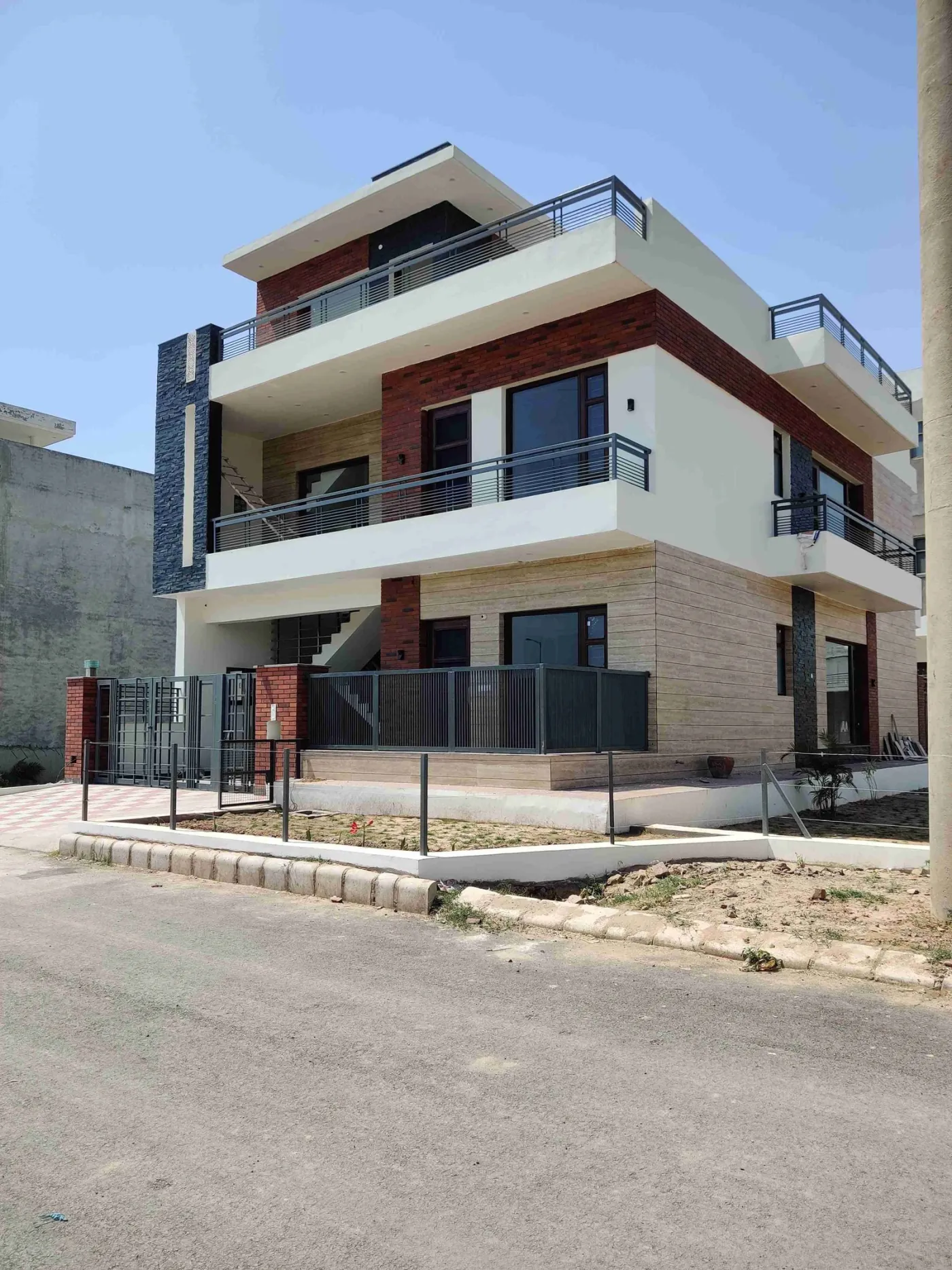
Elevation designer
Try brick cladding design ideas on a house front
Choose a part of the house, then a tile or a plaster colour. Use the presets to start from one of the ideas below.
Ten ideas
Brick cladding design ideas that work
- 01
A brick tower, a plaster box
Clad the staircase tower floor to parapet and keep the main block in white or cream plaster. The tower becomes the vertical anchor of the front.
- 02
Brick below, plaster above
Clad the ground floor and gate pillars and finish the upper floors in plaster. It grounds the house and keeps cost down.
- 03
Bands at the slab lines
Run brick between the floor slabs and leave the slab edges in plaster or concrete. The building reads as a stack of clean layers.
- 04
Match the boundary wall
Use the house tile, or a darker tile from the same colour family, on the boundary wall. House and plot read as one design.
- 05
Full brick with a dark base
Clad the whole front and set it on a charcoal stone or plaster plinth. The dark base stops splash marks from showing.
- 06
Slim tiles in stack bond
Lay 9×1.5 tiles with every joint lined up. The grid looks crisp and modern, and works best on short walls and interiors.
- 07
Dual tone at random
Mix light and dark tiles without a pattern. Ask the tiler to pull from several boxes at once so no colour clusters.
- 08
Soldier courses over openings
Stand tiles upright above windows and doors, the way old builders set lintels. Vertical Brown Texture is made for this.
- 09
Handmade with a wide, pale joint
Use a 12 mm cream joint with handmade tiles. The soft edges and deep shadow give a farmhouse or haveli feel.
- 10
One wall indoors, the first one you see
Inside, clad the wall that faces the entrance or the sofa, not every wall. One brick wall gives a room character; four make it dark.
Bonds
Bond patterns for brick cladding
The bond is the way tiles are set against each other. It changes the character of a wall as much as the tile does.
Stretcher bond
Each course shifted by half a tile. Looks like a real brick wall; the safe default.
Stack bond
Every joint lined up in a grid. Modern and graphic; needs a very flat wall and careful setting out.
Third bond
Courses shifted by a third. A little more relaxed than stretcher bond; suits long, slim tiles.
Soldier course
Tiles stood upright in a row. Used as a band, a lintel line or a plinth edge.
Joints
How joint colour changes a brick cladding design
Choose the joint colour with the tile sample in hand. A grout card from your adhesive supplier helps.
Questions
Brick cladding design questions
Not covered here? Call +91-90411-00702 and speak to the factory.
Which bond pattern looks best with brick cladding?
Stretcher bond, with each course offset by half a tile, looks the most like a real brick wall. Stack bond, with all joints lined up, looks modern and suits slim tiles. Herringbone is best kept for small panels.
What joint colour should I choose?
A light grey or cream joint makes each brick stand out. A joint close to the tile colour gives a calmer, more solid wall. Charcoal joints suit dark tiles and industrial interiors.
Can I mix two brick cladding colours?
Yes. Mixing a lighter and darker tile at random gives the variation of an old wall. Use one colour per zone if you want clear bands, for example one on the façade and a darker one on the boundary wall.
Quote and samples
Send us your design
Tell us the wall area, the city and the tile you are leaning towards. The form saves your details and opens WhatsApp with the message written, so it reaches the factory directly.
- Factory
- Village Kakkar Majra, Distt. Ambala, Haryana 134202
- Phone
- +91-90411-00702
- Hours
- Mon – Sat: 9 AM – 6 PM · Sun: Closed
